Acquisition project | LeadSquared - LeadSquared | GrowthX
Acquisition project | LeadSquared
đź“„

Acquisition project | LeadSquared

Hi there, we'll take this one step at a time!

​

If you struggle with a blank canvas, use this boilerplate to start. Remember, this is a flexible resource—tweak it as needed. Some sections might not apply to your product and you might come up with great ideas not listed here, don't let be restricted.

This is not the only format, we would love to see you scope out a great format for your product!

​

Go wild and dive deep—we love well-researched documents that cover all bases with depth and understanding.


Refer to the project brief and the additional resources before you begin this project!
(Go through them at least 3 times or till the time you don’t have a mind map in your brain)

Let’s begin

It's time to kickstart the project by taking a crack at building your Elevator pitch.

(Think of this as an introduction to your product- make it remarkable!)

​

LeadSquared is a modern enrollment and engagement platform built specifically for education institutions that operate at high velocity — from career schools to private universities.

Unlike generic CRMs, LeadSquared offers faster speed-to-lead, tailored automation, and real-time enrollment insights that help admissions teams capture every inquiry, respond instantly, and convert more students. With vertical-specific workflows, seamless integrations, and measurable ROI, LeadSquared removes the manual burden from your admissions process — so your team can focus on building meaningful student relationships and filling more seats.


Understanding LeadSquared's ICP

(We'll be doing the ICP mapping just for US Geography and the Education segment, which is relevant to my work. LeadSquared is an enterprise software present in different geographies and industries, but in US it is a early-growth company)


We have multiple users of a product and not all of them can be our ICP for whom we make our strategies, we need to prioritize.

(use an ICP prioritization table)

CriteriaICP 1: Career School Admissions Director

(Top Priority)

ICP 2: Private Non-Profit University VP of Enrollment

(High Priority)

ICP 3: Community College Director of Admissions

(Medium Priority)

ICP 4: Public University CIO / AVP Enrollment

(Low Priority)

Name

Alex

Emily

Carlos

Lisa

Title

Director/VP of Admissions

VP of Enrollment or Admissions Ops Lead

Director of Admissions or Enrollment Manager

AVP of Enrollment or CIO

Age

35–45

40–55

45–60

50–60

Location

Texas, Florida, Arizona, Midwest

Northeast, Southeast, Midwest

California, Illinois, Georgia

Large state institutions (e.g., SUNY, Cal State, UT system)

Salary Range

$100K–$150K

$120K–$180K

$90K–$140K

$140K–$200K

Experience Level

10+ years in admissions/sales

15+ years in higher ed management

10–20 years, government or public education background

15–25 years, often from IT or administrative side

Primary Goals

- Fill more seats fast

- Reduce lead leakage

- Increase conversion & retention

- Unify siloed teams

- Boost yield with minimal budget

- Simplify workflows

- Drive multi-campus alignment

- Centralize student systems

Pain Points

- Manual lead follow-ups

- Ghosting/no-shows

- Complex SIS/CRM stack

- Lack of real-time visibility

- Resource constraints

- Fragmented tools

- Bureaucratic IT change

- High scrutiny on data privacy

Buying Motivation

- Wants quick wins

- Values automation with low effort

- Strategic impact

- Wants system that aligns with retention goals

- Practical improvements, wants easy-to-use solution

- Long-term compliance & integration fit

Buying Concerns

- Budget approval from execs

- Integration with SIS (e.g. Banner)

- Cost, IT support burden

- Requires RFP

- High vendor scrutiny

Tech Comfort

Low–Moderate (prefers no-code tools)

Moderate (relies on IT + power users)

Low (manual-first team)

High (complex IT architecture)

Preferred Channels

- LinkedIn Ads

- Webinars

- Direct demo from SDR

- Peer referrals

- Analyst content

- Case studies

- Email

- Word of mouth

- Local events

- RFP portals

- CIO roundtables

- Association reports

Sales Cycle Length

1–3 months

3–6 months

6–9 months

12+ months

Ideal Messaging Hook

“Never miss another inquiry”

“From inquiry to orientation — automate the journey”

“Simplify your team’s workflow, not expand it”

“Built to integrate. Proven to scale.”

Demo Behavior

Will book if value is clear fast

Wants proof, often books after content review

Needs strong use-case alignment and peer examples

Requires security docs, technical overview, often 2+ meetings

Churn Risk

Low

Medium

Medium

High

LTV Potential

Medium–High ($100–150K)

High ($150–250K)

Medium ($75–100K)

High ($200–300K)

Strategic Fit for LSQ

Core ICP: strong product fit, fast sales

High-priority expansion: valuable logos

Emerging opportunity: good volume, needs packaged GTM

Long-term target: slow cycle, high effort


Strategic Tiering

Priority

ICP Segment

Notes

Top

Career Schools

Short cycle, urgent pain, perfect product fit

High

Private Non-Profits

High LTV, slightly slower process, strong expansion vector

Medium

Community Colleges

Price sensitive, strong use case, needs packaging & positioning tweak

Low

Public Universities

Long cycles, low urgency, high effort — future-fit segment only

Criteria

Career Schools

Private Non-Profits

Community Colleges

Public Universities

Product Fit

10

9

6

4

Urgency of Need

10

8

6

3

Ease of Acquisition

9

7

5

3

IT Dependency

9

6

4

2

LTV Potential

8

10

6

10

Sales Cycle Length (Inverse)

9

7

5

2

Strategic Value

10

9

7

5

Scoring Total (out of 70)

65

56

39

29


Buyer Decision Matrix – LeadSquared ICPs

This matrix maps out who initiates, influences, blocks, and approves the purchase decision for each ICP.

ICP PersonaBuyer (Owns the Problem)Influencer(s)Blocker(s)Decision Maker

Career School Admissions

Director/VP of Admissions

Admissions Reps, Marketing Manager

Campus President (budget), IT consultant

VP/Director or Campus President

Private Non-Profit VP

VP of Enrollment / Admissions Ops

Registrar, CRM Admin, IT Manager

CIO, Finance, Procurement

Provost or President (shared approval)

Community College Director

Director of Admissions

Enrollment Team, Retention Manager

IT team, Finance Dept.

Board/VP of Student Services

Public University CIO/AVP

CIO or AVP Enrollment

Project Manager, Institutional Research, Legal

Procurement, Security, Budget Oversight Board

CIO + Executive Cabinet + RFP Committee


(Before you begin, you need to know what your product is, what are its features, what is the problem being solved by your product?)​

Core Value Propositions


1. Instant Speed-to-Lead with FloStack

Convert interest while it's hot. FloStack routes and responds to every inquiry in real time — even off-hours — turning website visitors into booked appointments instantly.

2. Built for Education Workflows

Unlike one-size-fits-all CRMs, LeadSquared includes ready-to-use automation for:

  • Inquiry capture from CommonApp, SIS, and web forms
  • Campus tour follow-ups
  • Interview scheduling and student reminders
  • Admission counselor activity tracking

3. No-Code Customization for Admissions Ops

Empower your team to configure workflows, notifications, and dashboards — no IT dependency, no dev backlog.

4. End-to-End Visibility

Real-time dashboards give enrollment leaders insight into funnel performance, counselor productivity, and drop-off patterns — helping optimize decision-making.

5. Seamless Ecosystem Integration

Plug-and-play integrations with SIS platforms (Ellucian, Populi), CommonApp, LMSs, and marketing tools ensure LeadSquared fits into your existing tech stack.


Outcomes

  • 2x faster inquiry-to-response time
  • 30–50% increase in orientation and campus tour show-ups
  • Significant reduction in lead leakage and no-shows
  • Higher rep adoption and measurable ROI within weeks


(Let's begin by doing a basic competitor analysis in a tabular format considering all the parameters for your product and its competitors)


(Then let's try to understand the market at a macro level and evaluate the trends and tailwinds/headwinds.)

Now it’s time for some math, calculate the size of your market.

TAM = Total no. of potential customers x Average Revenue Per Customer (ARPU)
SAM = TAM x Target Market Segment (percentage of the total market)
SOM = SAM x Market Penetration/Share


Step 1: Total Addressable Market (TAM)

Definition: Total U.S. institutions LeadSquared could serve if no constraints existed.

Segment

Institution Count

Career Schools (For-Profit)

2,000

Private Non-Profit Universities

1,700

Community Colleges (Public 2-Year)

900

Public Universities (4-Year)

1,600

Total

6,200

ARPU = $50,000
TAM = 6,200 Ă— $50,000 = $310,000,000

TAM = $310 Million


Step 2: Serviceable Available Market (SAM)

Definition: Institutions that are a fit for GTM today.
Exclude public universities and community colleges.

Segment

Institution Count

Career Schools

2,000

Private Non-Profit Universities

1,700

Total

3,700

SAM = 3,700 Ă— $50,000 = $185,000,000

SAM = $185 Million


Serviceable Obtainable Market (SOM)

Definition: Estimated near- to mid-term market share.

SOM = $185M Ă— 15% = $27,750,000

SOM = $27.75 Million


Designing Acquisition Channel

(keep in mind the stage of your company before choosing your channels for acquisition.)

​

Channel Name

Cost

Effort

Flexibility

Speed

Scale

Organic (SEO, Blogs, Webinars)

Low

Moderate

High

High

Moderate

Partner

Medium

High

Moderate

Moderate

High

Paid Channels – LinkedIn, Google Ads

High

Moderate

High

Low–Moderate

High

Paid Channels – Sponsorships/Events

High

High

Moderate

Moderate

High

SDR Function

Medium

High

High

Low

Moderate–High


Organic Channel

(Understand the existing organic channel strategy for your product and highlight the success and failure thereon.
Provide your suggestions and devise new strategies.)

Step 1 → Conduct keyword research on Google, Amazon, Youtube, Quora etc.
Step 2 → Collate all your insights from all your searches.

Organic Strategy

1. Develop U.S.-Specific, Verticalized SEO Content

  • Launch content targeted at U.S. education terms: “CRM for U.S. universities,” “student enrollment automation for community colleges.”
  • Highlight regulatory and operational context specific to the U.S. (FERPA, CommonApp, etc.).

2. Create Funnel-Aligned, Long-Tail Pages

  • TOFU: “How to reduce campus tour no-shows,” “What to include in student inquiry forms”
  • MOFU: “Admissions automation platforms compared,” “Higher ed CRMs for small colleges”
  • BOFU: “Why LeadSquared vs Salesforce for career schools”

3. Optimize Existing Pages for Keyword Depth

  • Update admissions- and education-related blog posts with better H1/H2 structuring, internal links, and schema.
  • Add FAQ sections optimized for “People Also Ask” results.

4. Build Education-Focused Landing Pages

  • Create SEO-optimized microsites or landing pages targeting sub-segments like:
    • Career schools
    • Non-profit private universities
    • Community colleges


Summary

Strengths: Technical SEO, branded traffic
Weaknesses: Weak presence in U.S. education queries, no funnel-aligned keyword strategy
Opportunities: Own the niche around “CRM for enrollment” and “admissions automation” with U.S.-specific content
Next Moves: Keyword-led content calendar, optimize existing assets, build education SEO hubs

Keyword Research Highlights

KeywordIntentSearch VolumeOpportunity

“CRM for higher education”

MOFU

High

Strong

“automate student follow-up emails”

MOFU

Moderate

Moderate

“admissions management software”

BOFU

Moderate

Strong

“college enrollment automation tools”

MOFU

Low–Moderate

Niche

“best CRM for universities USA”

BOFU

Low

High Intent


Content Loop

(Keep it simple and get the basics right)

​

Step 1 → Nail down your content creator, content distributor and your channel of distribution
Step 2 → Decide which type of loop you want to build out.
Step 3 → Create a simple flow diagram to represent the content loop.


RoleDetails

Content Creator

Internal marketing team, supported by education SMEs and sales enablement

Content Distributor

Demand Gen Manager, Partner Marketing, and SDRs (via outbound follow-ups)

Primary Channels

- Webinars (live + on-demand) - LinkedIn (personal + company pages) - Monthly Education Newsletter - Inbound Blog (SEO-driven) - Email drips (for webinar registrants, blog readers, demo watchers)

Content Loop #1: Webinar Snippet → LinkedIn Loop

Goal: Increase webinar attendance and list size with repurposed micro-content

Loop Flow:

  1. Run a Live Webinar
  2. Chop into short video/snippet highlights (30–60s)
  3. Post snippets on LinkedIn (company + speaker personal pages)
  4. Each post includes CTA to register for next webinar or download full recording
  5. Registrants join the email list + future webinar cadence
  6. Email reminders and LinkedIn event posts drive attendance
  7. Run next webinar → Repeat

This creates a compounding audience across email and LinkedIn.


Content Loop #2: Customer Story → Peer Lead Loop

Goal: Drive social proof → inbound demos from similar institutions

Loop Flow:

  1. Capture a U.S. education case study (e.g. “How XYZ College increased enrollment by 22%”)
  2. Turn into:
    • One-pager
    • LinkedIn carousel
    • Webinar spotlight session
    • Quote snippets
  3. Share on LinkedIn (tag decision-makers)
  4. Send via SDRs to similar school personas ("We just helped a peer")
  5. Leads book demos → they become future case studies

The flywheel is powered by social proof and peer benchmarking.


Content Loop #3: Newsletter Insights → Triggered Search Loop

Goal: Use newsletter content to reinforce search authority and capture subscribers

Loop Flow:

  1. Send monthly “Admissions Intelligence” newsletter
    • Topics: conversion tips, enrollment data, AI in education, etc.
  2. Each section links to an in-depth blog article
  3. Blog articles optimized for SEO and “People Also Ask” results
  4. Blog readers retargeted with ads to join newsletter or register for webinar
  5. Newsletter continues → builds trust → pipeline

This loop boosts organic traffic and re-engages cold leads.


Content Loop #4: Demo Request → LinkedIn Nurture Loop

Goal: Catch demo drop-offs and nurture via social drip

Loop Flow:

  1. Visitor requests demo but doesn’t book → enters nurturing sequence
  2. They receive 1–2 emails with value-added content
  3. They’re added to a custom LinkedIn audience
  4. They see:
    • Webinar promos
    • Customer testimonials
    • Product GIFs
    • “Why not Salesforce?” type posts
  5. They return to book demo → success email shared on LinkedIn

Ideal for rescuing lost leads and scaling retargeting smartly.


(Understand what is already being done, what is working out well and what needs to be stopped)

Step 1 → Define the CAC: LTV ratio. If your product has a healthy CAC:LTV ratio, proceed with paid ads.

Step 2 → Choose an ICP

Step 3 → Select advertising channels

Step 4 → Write a Marketing Pitch

Step 5 → Customize your message for different customer segments to ensure relevance

Step 6 → Design at least two ad creatives (e.g., images, sketches, videos, text ads) that reflect your marketing pitch.


Step 1: CAC:LTV Ratio

  • ARPU = $50,000
  • Estimated LTV (3 years) = $150,000
  • Estimated CAC (via paid channels) = $2,000–$3,000

CAC:LTV = 50:1 or better → Very healthy, proceed with paid ads confidently. (Caveat: The universe being small and highly competitive there is only so many leads that can come in through ads)


Step 2: ICP (Ideal Customer Profile)

ICP

Career School Director of Admissions

Title

Director/VP of Admissions, Campus Director

Goals

Fill more seats, reduce no-shows, improve follow-ups

Pain Points

Ghosted applicants, lead leakage, manual process overload

Channels

LinkedIn, Email, Google Search, Facebook (retargeting)

Persona Insight

Feels pressure to hit enrollment goals every cycle with a lean team


Step 3: Advertising Channels

Channel

Why it works

LinkedIn Ads

Laser-target by job title, company size, region (e.g., “Director of Admissions” at schools with 50–500 employees)

Google Search Ads

Capture demand for keywords like “CRM for admissions,” “enrollment management system,” “higher ed CRM”


Step 4: Unified Marketing Pitch (Aligned to Creatives)

Core Problem Framing:

U.S. education teams are losing hours to manual follow-ups, watching leads disappear, and struggling with student no-shows — and they know it’s killing results.

General Marketing Pitch:

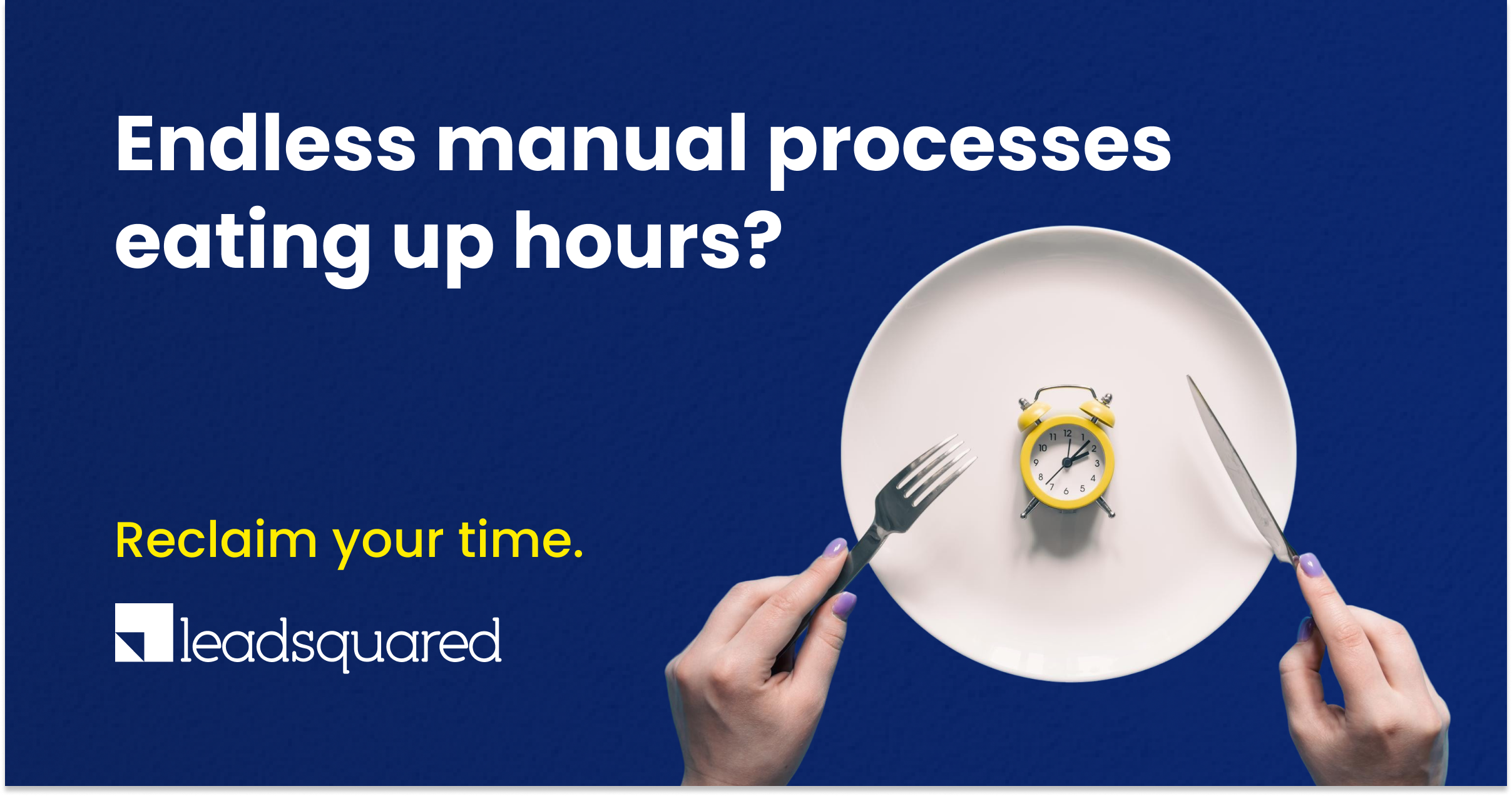
Endless manual processes are eating up your team’s time.
Leads are falling through the cracks.
Students are ghosting you after scheduling.

LeadSquared gives admissions teams the automation they need to:

  • Route inquiries instantly
  • Follow up automatically
  • Get students to show up on time — and enroll

Reclaim your time. Seal the gaps. End the silence.

→ Book a 15-min demo today


Step 5: Segmented Messaging (Per Creative)

1. Creative: "Endless Manual Processes Eating Up Hours?"

  • Segment: Operations-heavy admissions teams
  • Message: “Automate every inquiry-to-enrollment touchpoint. No IT needed.”
  • CTA: “Reclaim 20+ hours per week — book a demo.”

2. Creative: "Students Ghosting You on Campus Dates?"

  • Segment: Career school admissions with high drop-off
  • Message: “Send reminders. Reschedule automatically. Personalize engagement.”
  • CTA: “Convert ghosted leads into enrollments.”
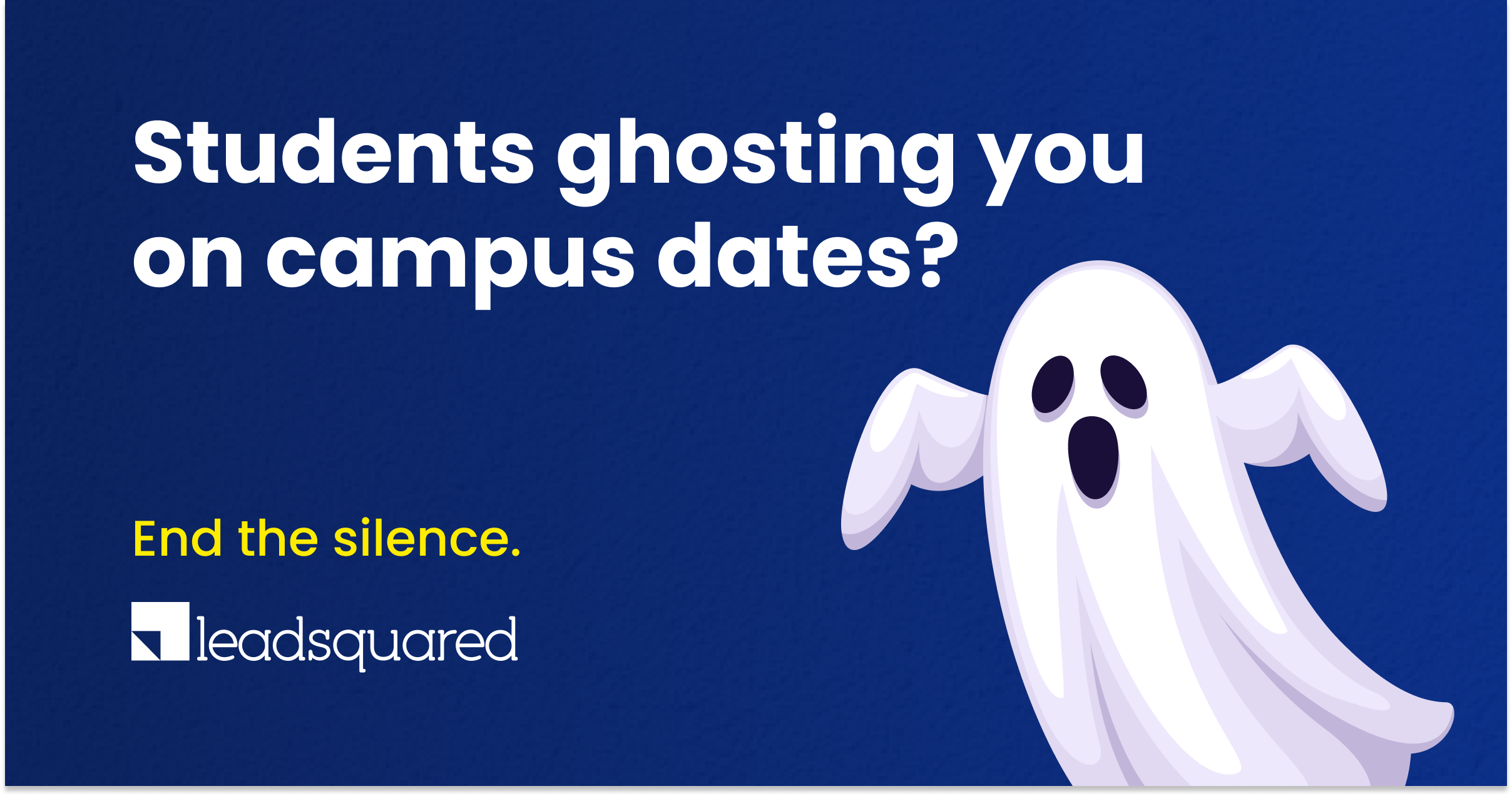

Students ghosting you on campus dates_.png


Endless manual processes eating up hours_.png


(Understand, where does organic intent for your product begins?)

​

Step 1 → Identify complementary products used by your ICP
Step 2 → Use the selection framework and compare the potential integrations it in a tabular form.


Channel Name


Integration Partner 1

​


Integration Partner 2

​


Integration Partner 3


​


Step 3 → Collaborate with necessary stakeholders
Step 4 → Map the customer journey
Step 3 → Design the wireframe with the new integration
Step 3 → Run pilot tests before launching
Step 3 → Measure post-integration metrics

​

(For B2B companies, if referral does not make sense you'll take a crack at a partner program for your product)

​

Step 1 → Flesh out the referral/partner program
Step 2 → Draw raw frames on a piece of paper to get the gist.​


Partner Type

Who They Are

Why It Works

EdTech Integration Partners

SIS/LMS vendors (e.g., Ellucian, Populi, Canvas)

Combine forces where CRM + SIS = full solution

Enrollment Consultants

Independent consultants or firms like Ruffalo Noel Levitz

Trusted by universities to recommend tools

Marketing Agencies

Agencies serving education institutions

Already managing lead gen and tech strategy

Associations/Industry Orgs

NACAC, CECU, private education consortiums

Co-sponsor content, referrals, thought leadership

Tech Stack Resellers (VARs)

Firms implementing CRMs/SaaS for schools

Incentivized to resell LeadSquared


Incentive Structure

Partner Tier

Criteria

Commission/Reward

Support Offered

Affiliate

Submit qualified lead

10% of first-year revenue

Co-branded assets

Referral Partner

Lead + basic context sharing

15% of first-year revenue

Dedicated partner manager

Solution Partner

Implements LSQ or bundles with other tools

20–25% of first-year revenue + renewals

Training, co-marketing, early features


Partner Package Includes:

  • Partner Portal Access: Resources, case studies, lead submission tracker
  • Sales Enablement Kit: Decks, demo videos, vertical use cases
  • Certification Program (for consultants/VARs)
  • Quarterly RevShare Statements
  • Slack Channel / Support Desk Access

Partner Activation Plan

Phase

Tactics

Month 1–2

Build partner kit, sign up beta partners, announce program

Month 3–6

Host 1 webinar with each partner type, offer co-branded ebook/case study

Month 6–12

Launch certification + tiered commissions, scale 1:1 enablement


[object Object],[object Object],[object Object],[object Object],[object Object],[object Object],[object Object],[object Object],[object Object],[object Object]

Brand focused courses

Great brands aren't built on clicks. They're built on trust. Craft narratives that resonate, campaigns that stand out, and brands that last.

View all courses

All courses

Master every lever of growth — from acquisition to retention, data to events. Pick a course, go deep, and apply it to your business right away.

View all courses

Courses

Built by Leaders From Amazon, CRED, Zepto, Hindustan Unilever, Flipkart, paytm & more
View All Courses
Advanced Growth Strategy
Brand Led Growth
Creative Strategy
Storytelling
Data Led Growth
Event Led Growth
Partnership Led Growth
Tech for Growth
Go to Market
Growth Model Design

Crack a new job or a promotion with ELEVATE

Designed for mid-senior & leadership roles across growth, product, marketing, strategy & business

View All Resources

Learning Resources

Browse 500+ case studies, articles & resources the learning resources that you won't find on the internet.

Patience—you’re about to be impressed.